


The 2026 Consumer Electronics Show (CES) in Las Vegas wrapped up this week, highlighting a shift in how Chinese tech companies approach global expansion. More than showcasing cutting-edge hardware, exhibitors are increasingly focusing on brand influence, scenario-driven technologies, and the development of international ecosystem strategies, signaling a new phase in China’s next-generation firms going global.
According to incomplete statistics of TMTPOST, 916 Chinese companies participated in CES 2026, excluding those from Hong Kong, Macau, and Taiwan resions, as well as multinational brands like Lenovo, TCL, and Anker that exhibited under a U.S. theme. Chinese exhibitors now form the second largest national contingent at the show, leveraging AI hardware and physical AI products to capture international media attention and global distribution opportunities.
Industry observers note that Chinese innovators are moving beyond single-product strategies, instead building multi-brand ecosystems and scenario-driven solutions that define global markets.
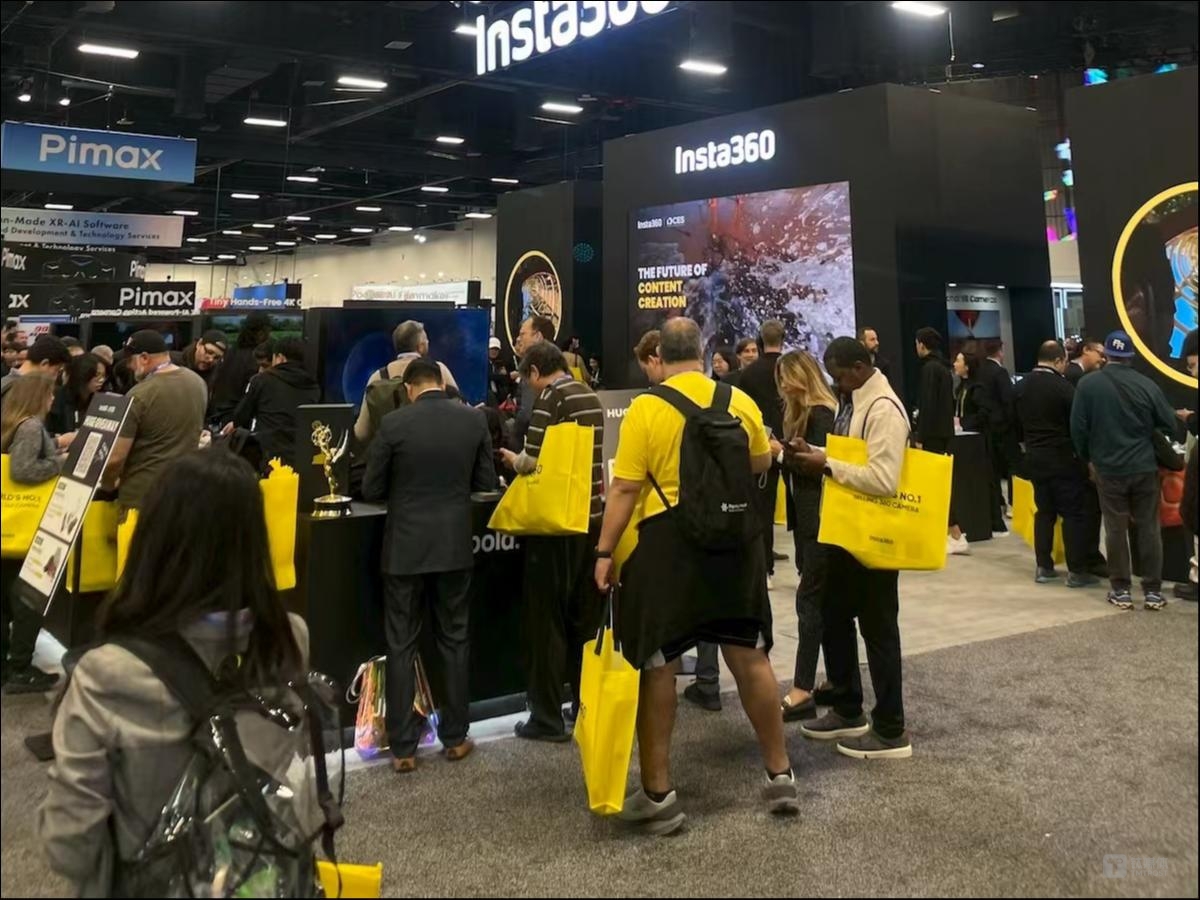
Insta360: Creating a “Yellow Storm” of Global Attention
Insta360, the smart imaging company, dominated CES 2026 with its signature yellow tote bags, visible throughout the Las Vegas Convention Center (LVCC) and across the city. As a sponsor of the official CES tote, the brand disrupted a space long dominated by Nikon, turning its presence into a textbook example of “attention marketing.”
The city-wide yellow bags sparked conversation on social media and among locals. One Uber driver told a reporter that he had switched from GoPro to Insta360 after a device replacement incident, illustrating the power of brand trust, after-sales service, and visibility in driving global adoption.
Financially, Insta360 is expanding rapidly. The company reported revenue of 6.611 billion yuan in the first three quarters of 2025, up 67.18% year-on-year, and anticipates 8.808 billion yuan in annual revenue. At CES, Insta360 unveiled its 8K panoramic drone, Antigravity A1, and its professional-grade webcam, Link 2 Pro, signaling a move into high-end and professional markets beyond consumer products.
“By turning CES into a global stage rather than a mere exhibition, we are defining the conversation,” said an Insta360 spokesperson. The brand exemplifies China’s shift from cost-effective hardware to strategic brand influence.
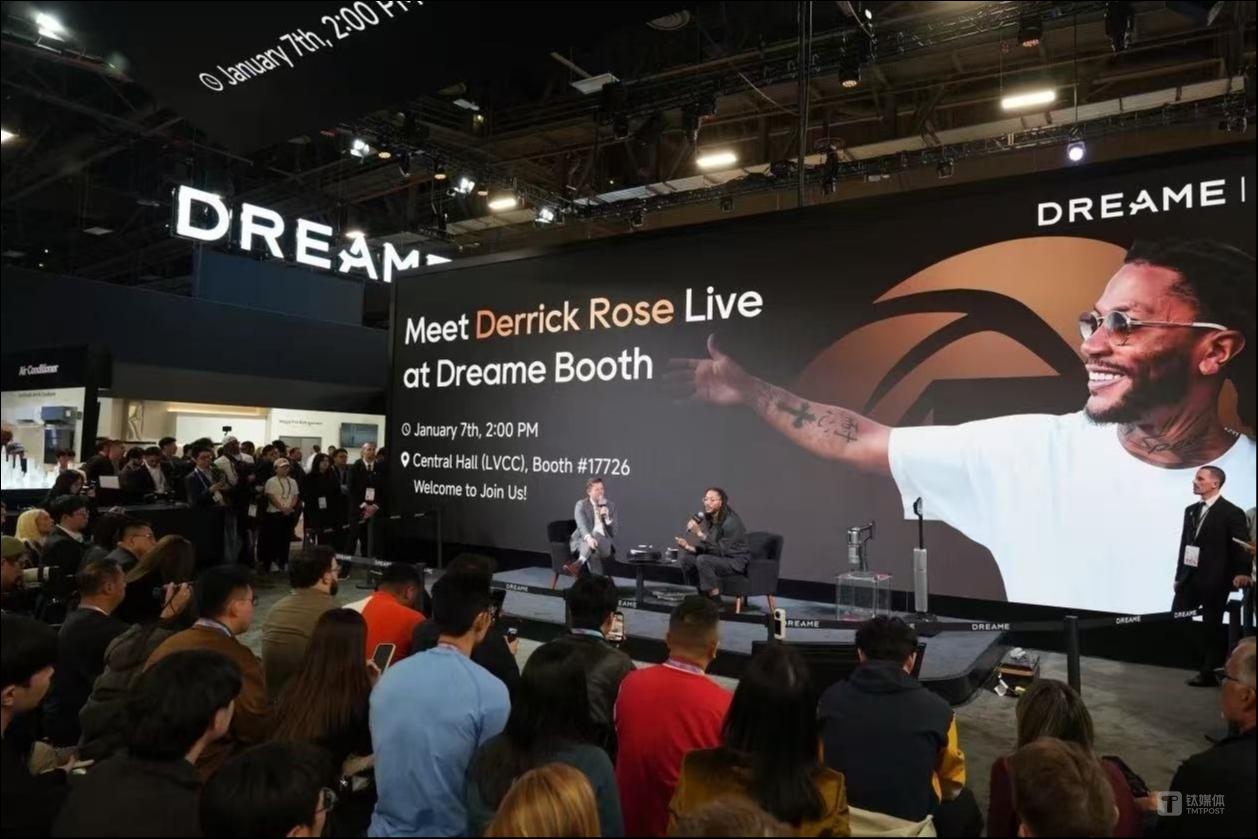
Dreame Technology: Multi-Product Ecosystem and Celebrity Engagement
Dreame Technology, a smart home appliance brand, claimed a prime booth in the central LVCC hall, directly adjacent to long-established giants like Hisense and Panasonic. Beyond the main hall, Dreame maintained visibility in other exhibition areas, showcasing a full suite of products: robot vacuums, floor washers, lawn mowers, refrigerators, washing machines, and TVs.
Dreame’s approach demonstrates a transition from single-category dominance to multi-product, platform-based competitiveness. The company also invited American basketball star Derrick Rose for on-site engagement, blending tech demonstration with mass-market visibility.
Revenue growth underscores Dreame’s confidence: the first three quarters of 2025 saw 12.07 billion yuan in revenue (up 72.2% year-on-year) and a net profit of 1.04 billion yuan. Its robot vacuum market share reached 12.4% globally, ranking third worldwide. The company projects annual revenue approaching 30 billion yuan.
Yu Hao, Dreame’s founder, has publicly expressed his ambition to build a $10 billion global enterprise, and the CES presence signals the brand’s strategic execution in both ecosystem development and global market positioning.
MOVA: Building a Multi-Scenario Universe
Founded in 2024, smart technology brand MOVA demonstrated its multi-scenario approach with three booths across CES’s main halls. Products included a flying robotic sweeper, a pool-cleaning robot with a bionic arm, an off-road lawn mower, and smart pet devices such as location collars and intelligent cat litter boxes.
MOVA’s exhibition created a cohesive universe, integrating home, outdoor, and pet care solutions. Similarly, Navee (smart mobility) and Stareep (intelligent beds) staged large-scale showcases in the LVCC North Hall and Venetian Expo, signaling Chinese brands’ capacity to stage high-profile, multi-brand campaigns in overseas markets.
Orbbec: Physical AI for Industrial Precision
Orbbec, a leader in 3D vision sensors for service robots with a 70% market share in China, presented comprehensive industrial solutions during CES. The Gemini 305 binocular 3D camera can image objects as close as 4 centimeters, reducing blind spots by 43% compared with prior industry products.
The high-frequency Gemini 305g enhances durability and stable data transmission for robotic arms, addressing global manufacturing demands for high precision, sensitivity, and durability.
Orbbec exemplifies China’s shift from module suppliers to scenario definers, offering solutions that integrate hardware, software, and industrial applications for next-generation Physical AI.
Dobot: Entertainment, Education, and Home Robotics
Dobot leveraged CES to showcase applications of Physical AI across commercial entertainment, education, and home companionship:
Interactive walking dinosaur puppet for amusement parks and shopping centers
DOBOT Atom humanoid robot for educational manipulation exercises
DOBOT X-Trainer robot demonstrating advanced motion control
Rover X1 household robot dog powered by large model AI, capable of following users, taking photos, interacting, and supporting educational programming for teenagers
Dobot’s integration of learning, companionship, and entertainment highlights the expanding role of Physical AI in both consumer and industrial contexts.
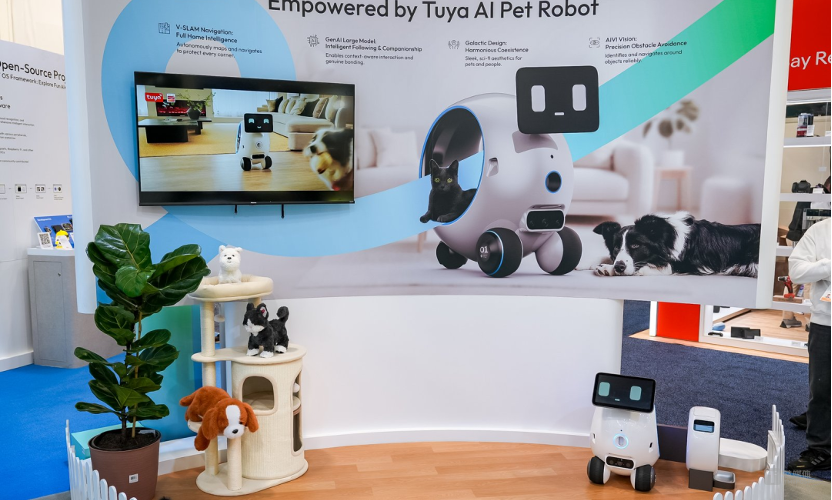
Tuya Smart: AI Life Assistants and Pet Companions
Tuya Smart introduced Aura, an AI pet companion, capable of treating pets, playing games, interpreting emotions, and relaying information to owners. Tuya’s Hey Tuya AI life assistant connects multiple devices and proactively offers recommendations for home, office, and fitness scenarios, showcasing the company’s integrated hardware-software-platform ecosystem.
The company emphasized plans to extend Aura’s emotional companionship capabilities to children and elderly care, reflecting a trend toward scenario-driven, emotionally intelligent AI products.
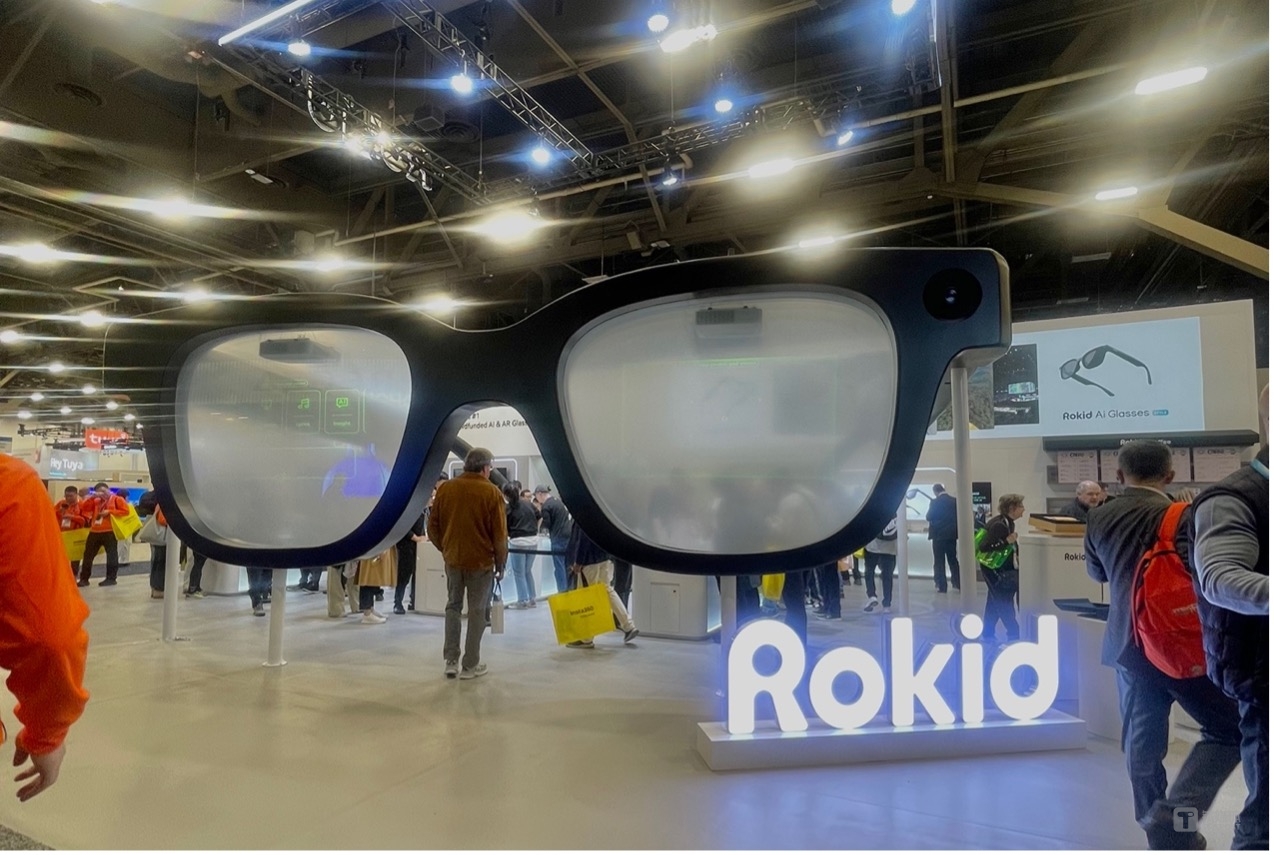
Rokid: AR+AI Glasses and Payment Integration
AR+AI company Rokid launched its ultra-lightweight 38.5g AI glasses, Rokid Style, for overseas markets. Rokid partnered with Ant International to integrate overseas payment solutions, addressing challenges in local consumer habits and creating a “hardware + fintech” user experience moat.
This collaboration illustrates Chinese firms’ move from pure hardware innovation toward global ecosystem solutions that integrate software, finance, and user behavior understanding.
Autel: Smart Energy and Transportation Solutions
Autel, entering the new energy sector from automotive diagnostics, showcased intelligent charging and inspection robots and a comprehensive solar-storage-charging-inspection energy solution.
Future autonomous vehicle deployments could leverage these robots for seamless queue-based charging, using cloud-based message flows, robotic arm closed loops, and fleet queue management to enable automated charging. Autel’s V2G ACCompact Gen 2 device allows vehicles to act as virtual power plants for households, supporting grid scheduling and cost reductions.
Autel demonstrates China’s ability to deliver integrated industrial and energy solutions to global markets, extending beyond consumer hardware.
Shenzhen Institute of Innovation and Technology: Nurturing Ecosystem-Based Expansion
The Shenzhen Institute, together with XbotPark and over 40 affiliated companies, established a pavilion at the Venetian Expo, highlighting ecosystem-based international expansion. Startups including:
Jichui Innovation (nitrogen beverage machines) – in-depth discussions with 10+ overseas channel partners
Bolan Intelligent (smart shoe-washing machines) – thousands of overseas intent orders
Takway.AI by Zero Motion Future – secured U.S. dollar fund investment term sheets on-site
These examples illustrate a trend of deep industry-chain collaboration, creating “fleet voyages” rather than solo efforts for global market entry.
CES 2026 demonstrated that Chinese innovation has moved beyond individual product excellence to brand-driven, ecosystem-focused global strategies. Companies are no longer just selling hardware—they are building multi-brand, multi-scenario ecosystems that integrate software, hardware, services, and partnerships.
Key trends observed:
Brand leadership – Chinese companies are turning exhibitions into strategic platforms for global brand influence.
Scenario innovation – Physical AI, smart home, and industrial solutions are being applied across real-world contexts.
Ecosystem collaboration – Horizontal and vertical partnerships across fintech, energy, AR, robotics, and consumer applications form systemic competitiveness.
The next decade of Chinese global expansion will rely on strategic coordination, scenario-based innovation, and ecosystem-wide execution, transforming China’s “fleet of innovators” into long-term global leaders.