

For decades, Chinese consumer electronics brands entering North America followed a familiar script: competitive pricing, fast manufacturing cycles, and a quiet push through online channels. That script is now being rewritten.
A new generation of Chinese technology companies is no longer content to be perceived as low-cost alternatives. Instead, they are positioning themselves as premium, intelligence-driven brands that compete on innovation, user experience, and scenario-based solutions.
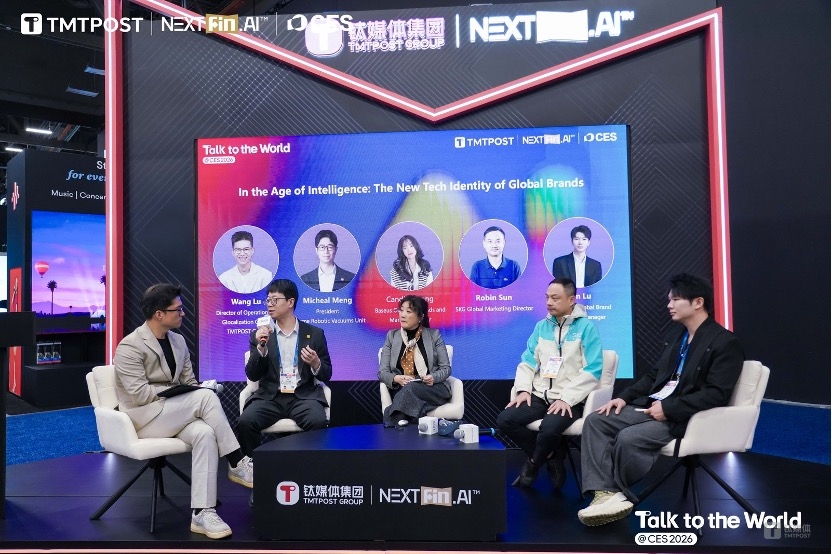
This shift was on full display at this year’s Consumer Electronics Show (CES) in Las Vegas. Among the sprawling exhibition halls, one booth stood out not only for its size, but also for its location: Dreame Technology, a Chinese smart home brand best known for its robotic cleaning products, secured a prime, high-traffic area and showcased an expansive lineup of AI-powered devices. The message was unmistakable—Chinese brands are no longer hiding in the corners of global trade shows. They are staking a claim at the center.
Over the past two years, a growing number of emerging Chinese tech brands have adopted what industry insiders describe as a “land, sea, and air” approach to global branding. This strategy combines global exhibitions, localized offline retail, and deep collaboration with celebrities, influencers, and sports organizations. It marks a decisive break from earlier globalization models that prioritized cost efficiency and export volume over brand building.
“From the very beginning of our overseas expansion, Dreame positioned itself as a high-end brand,” said Meng Jia, President of Dreame’s Robot Vacuum Division. “Once our products gained recognition among users, the next step was to systematically elevate brand awareness and brand perception.”
Dreame’s approach reflects a broader transformation across Chinese tech companies going global: globalization is no longer just about entering markets, but about earning long-term trust and relevance within them.
Major global exhibitions such as CES in the United States and IFA in Germany have become critical platforms for Chinese brands to reshape their international image. For Dreame, CES is not merely a product launch venue—it is a brand statement.
At CES 2025, Dreame unveiled several flagship products that underscore its shift toward embodied intelligence and AI-driven home solutions. Among them was an embodied intelligent home robot equipped with a four-wheel chassis and dual robotic arms, capable of tidying tables, cleaning multi-level spaces, doing laundry, and even folding clothes. Powered end-to-end by AI algorithms, the robot illustrates Dreame’s ambition to move beyond single-function appliances toward holistic smart home assistants.
Another highlight was a stair-climbing robot vacuum, designed specifically to address a pain point prevalent in North American households, where multi-story homes account for 30%–40% of residences. Using a six-track system and a triple braking mechanism, the device can climb stairs safely at 0.2 meters per second—fast enough to ascend an entire floor in just 30 seconds while ensuring safety for children, pets, and furniture.
Dreame also showcased its flagship X60 Ultra robot vacuum, the thinnest in the industry at just 7.95 centimeters. Equipped with binocular vision and a large AI model, the device can identify and avoid more than 200 types of obstacles—an innovation tailored to cluttered, carpet-heavy North American homes.
“These products are the result of deep user insight,” Meng said. “When you truly solve real user pain points, users are willing to pay for innovation.”
Across the roundtable discussions at CES, one theme emerged repeatedly: the most important competitive advantage for the new generation of Chinese brands is no longer the supply chain alone, but the ability to understand users and translate insights into rapid product innovation.
For Baseus, a Chinese company spanning mobile digital devices, smart audio, and smart security, this philosophy has driven product development across categories. Huang Jian, Head of Overseas Brand and Marketing at Baseus, noted that North American users demand seamless multi-device connectivity, intelligent power management, and uncompromising safety standards.
In response, Baseus developed a line of docking stations priced between $100 and $200 that integrate wired and wireless charging, support multiple monitors, and intelligently distribute power. The products have received strong feedback on Amazon, validating the company’s insight-driven approach.
Security is another area where user anxiety has shaped innovation. Baseus’s Security X1 Pro AI Dual Tracking Camera, launched via Kickstarter, features dual 3K cameras, adaptive solar power, edge AI recognition, and local storage of up to 512GB. By actively identifying false alarms and abnormal scenarios, the product shifts security monitoring from passive recording to proactive protection.
“Overseas users are very vocal,” Huang said. “Their reviews are detailed, sometimes brutally honest, and incredibly valuable. This kind of feedback drives healthy iteration.”
The repositioning of Chinese brands is not limited to products—it extends deeply into brand storytelling and cultural alignment.
At last year’s IFA, Baseus launched its Inspire high-end audio line using an unconventional approach: instead of a traditional press conference, the company gathered core European media, collaborated with well-known music and lifestyle creators, and framed its brand narrative around “tech equality”—the idea that advanced technology should be accessible, fair, and human-centered.
“This message resonated strongly with Gen Z users, but it also connected with older consumers,” Huang said. “When brand values align with user values, conversion follows naturally.”
SKG, a Chinese brand specializing in health and wellness devices, has adopted a similar dual-track approach that blends top-tier endorsements with authentic user experiences. Sun Chengbing, SKG’s International Marketing Director, explained that North American users place a strong emphasis on sports recovery and portability.
SKG’s products, such as its foldable G7pro-Fold massager and titanium-alloy head massagers, are designed to accommodate different body types and usage scenarios. The company has partnered with figures such as Maye Musk and former NBA star Tracy McGrady to elevate brand credibility, while also planning World Cup-related marketing to expand global visibility.
While brand positioning remains globally consistent, execution must be localized—a balancing act that defines success or failure in overseas markets.
“Brand globalization is about finding equilibrium between global consistency and local expression,” said Huang. Core brand values must remain unified, but product communication, channel strategy, and service models must adapt to regional realities.
This philosophy is echoed by Lu Jiayu, Head of Overseas Brand Marketing at Madhouse, a BlueFocus Media subsidiary specializing in global brand services. Lu emphasized that effective localization goes beyond translation—it requires cultural sensitivity and creative testing.
“A camera brand might emphasize night photography in North America and travel documentaries in Europe,” Lu explained. “We often run small-scale creative sensitivity tests before rolling out large campaigns. This ensures that users in different markets experience the brand in ways that resonate locally.”
Despite perceptions that overseas competition is primarily among Chinese firms, industry leaders argue that the battlefield remains global.
“Our competitors in the U.S. are still primarily strong local brands,” Sun said. “They dominate mainstream channels and have deep marketing resources. That pushes us to continuously improve.”
Meng shared a similar view, stressing that complacency is the biggest risk. Dreame invests more than 7% of its annual revenue into R&D, supported by a team of over 200 engineers, including graduates from top universities such as Tsinghua. Combined with China’s world-leading supply chain, this R&D intensity forms Dreame’s long-term moat.
As Chinese brands expand across North America, Europe, Southeast Asia, the Middle East, and beyond, globalization increasingly resembles a chess game—one that requires precision, patience, and respect for local markets.
“Globalization is not a one-size-fits-all strategy,” Meng concluded. “It’s about ‘one policy for one market.’ From product configuration and certification to after-sales service and community engagement, everything must be tailored.”
For this new generation of Chinese tech brands, success abroad is no longer measured by shipment volume alone. It is defined by brand trust, user loyalty, and the ability to deliver intelligent, scenario-based solutions that feel local—no matter where they are made.