

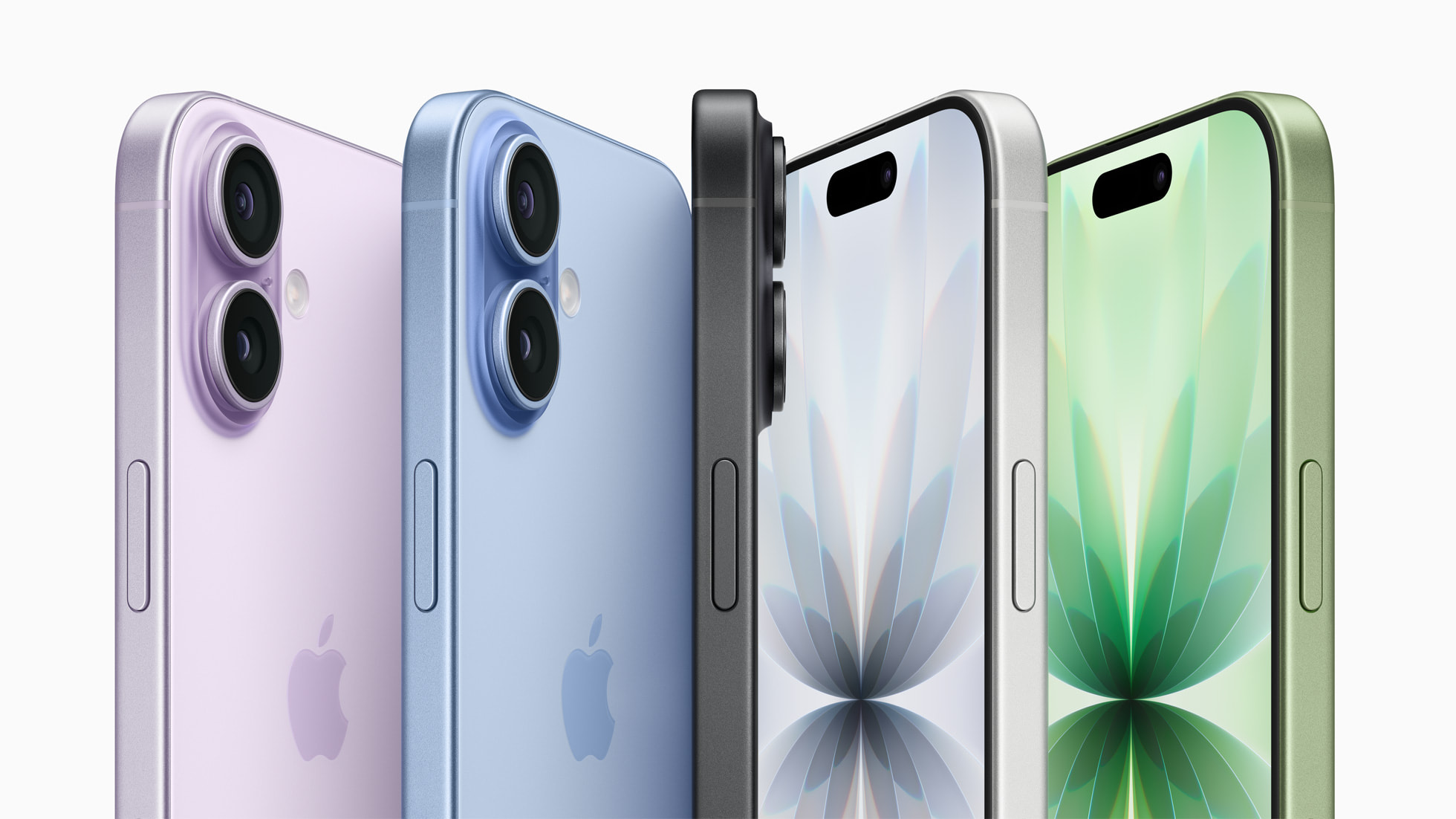
Apple plans to expand its flagship smartphone lineup to at least seven models by fall 2027 from five today, introducing its first foldable iPhone and experimenting with curved glass designs in its most significant product evolution in years, according to recent reports citing multiple people working directly on the devices at Apple and its suppliers.
Credit:Apple
The Information reported Tuesday that the company will release its first foldable iPhone in fall 2026, featuring a display that is wider than it is tall when unfolded, resembling a small iPad. The expansion comes as Apple seeks to bolster growth in its most important product line, which accounts for nearly half of revenues and generated over $209 billion in sales during its most recent fiscal year.
A year after the foldable debut, Apple plans a 20th-anniversary iPhone edition in fall 2027 featuring curved glass enclosures that eliminate the black frame and expand screen size, according to four people involved in the project. The company will also introduce new base models on staggered release schedules and attempt large-scale manufacturing in India before China.
The moves represent Apple's most aggressive smartphone diversification as annual iPhone sales growth has stalled in recent years, with consumers holding devices longer. The fiscal 2025 increase of 4% came partly from iPhone 17 models featuring more significant design changes than prior generations.
Foldable iPhone Arrives With Premium Positioning
Apple's first foldable device, internally coded V68, remains on schedule for fall 2026 delivery despite being one of the company's most complex phones to date, The Information learned from multiple people involved in the project. To meet that deadline, Apple earlier this year delayed a foldable iPad planned for the same period and reassigned those engineers to the iPhone project, Bloomberg previously reported.
Unlike Samsung and Google's foldable phones, Apple's product will have an aspect ratio similar to Apple's largest iPads in landscape mode. When closed, the phone will measure around 5.3 inches; when unfolded, it will sport a 7.7-inch display, according to people working on the device. A single selfie camera will be embedded in the top-left corner along with light and proximity sensors.
The display materials involve specialty glass companies including Corning and Germany's Schott, which already supplies materials for Samsung foldable smartphones. Apple suppliers including Lens Technology and Biel Crystal are working on different parts of the multi-layer foldable display. People working directly on the device report high defect levels in display production, though this is typical at this development stage.
Several factors could limit sales. Apple will likely charge a premium, as Samsung and Google have done with their folding models. The 5.3-inch outer screen is smaller than the iPhone Mini's 5.4-inch display, potentially limiting appeal, though one person cautioned that display sizes could change. Foxconn is leading trial production at its Guanlan factory in China. Industry analysts estimate the device will carry an average selling price around $2,400 and capture more than 22% of global foldable smartphone unit shipments and 34% of segment market value in its first year, according to IDC projections.
Technical Breakthroughs Enable All-Screen Ambitions
Apple will debut under-screen camera technology in its foldable before adapting it for future devices, according to Chinese leaker Digital Chat Station, who has accurately revealed previous iPhone designs. The foldable will feature a 24-megapixel under-display camera for its inner screen—a significant jump from the 4- or 8-megapixel sensors typically used in Android devices, where image quality suffers behind display layers.
The device will use a side-mounted Touch ID fingerprint sensor rather than Face ID to maintain thinness, representing the first all-screen display on any Apple device. The engineering prototype features a 7.58-inch internal display with an under-panel camera and a 5.25-inch external panel with a punch-hole camera using Hole-In-Active-Area design. The foldable will include a dual 48-megapixel rear camera system with physically larger sensors.
Apple is developing what it describes internally as a "crease-free" foldable using innovative hinge designs incorporating liquid metal components and custom stress-distribution systems, according to reports. Digital Chat Station described the hinge design as "very strong," addressing the visible crease that has plagued competing foldable devices. The device is expected to measure just 4.5-4.8mm when unfolded.
Pro Models Get Display and Chip Advances
Apple plans to integrate the Face ID sensor under the display of the iPhone 18 Pro and Pro Max models (internal code names V63 and V64) in fall 2026, using materials from Canadian company OTI Lumionics, according to people working on the projects. This will eliminate the black oval appearing at the top of iPhone displays since 2022 and relocate the selfie camera to the top left. OTI Lumionics declined to comment.
The Pro models will add a mechanical aperture to at least one rear camera that can control light entering the lens, enabling a new image sensor that captures more light at night while preventing washed-out daytime photos. Cosmetic appearance will resemble the iPhone 17 Pro models.
Apple will adopt Wafer-Level Multi-Chip Module packaging technology from Taiwan Semiconductor Manufacturing Co., putting memory chips closer to the iPhone's core processor. This could enable advanced AI features responding more quickly to user commands without relying on cloud servers, reducing latency for users and operational costs for Apple.
Base Model Strategy Shifts to India Manufacturing
For the first time, Apple will announce and release a new base iPhone 18 model (code name V67) in spring 2027, at least six months after Pro models from the same generation debut, according to people familiar with the plans. The company will attempt to manufacture the device at scale with Foxconn at its Bangalore factory before doing so in China as it reduces manufacturing dependence on the latter country.
Known features suggest an incremental update. Apple plans to remove haptic feedback and touch sensing from the capture button on the bottom-right edge, providing cost savings compared to previous models. The iPhone 18e budget model (code name V69) will maintain wireless charging from its predecessor and also launch from India-based production.
The iPhone 17e (code name V159), expected spring 2026, represents an incremental upgrade to the iPhone 16e budget device that debuted spring 2025. It will feature a glass back supporting wireless charging—a feature consumers missed most on the iPhone 16e—and include Apple's latest in-house C1X modem.
Anniversary Edition and Air Redesign
The iPhone 20 (code name V72), timed for the 20th anniversary of the iPhone's 2007 introduction, will feature curved glass enclosures on front and back along all four edges, enabling a screen without the typical black frame appearing on smartphone displays, according to four people involved in the project. Instead of a full metal frame, only a narrow metal band will run around the device's midpoint where buttons sit.
Apple plans to place the selfie camera under the display, making it the first iPhone with a full edge-to-edge display without cutouts. The design closely resembles former Apple design chief Jony Ive's ultimate vision of a phone made from a single glass slab.
Apple abruptly canceled trial production of the iPhone Air 2 (code name V62) last month after beginning work with manufacturers in summer 2025, according to seven people working directly on the device. The company is redesigning the phone due to poor first-generation sales, considering adding a second camera and cutting the retail price. China's Luxshare will lead trial production, slated to restart as early as March, at its Kunshan factory. The device was originally planned for fall 2026 release but is now scheduled for spring 2027.
Broader Product Portfolio Confirmed
An Apple prototype device running an early iOS 26 build was inadvertently sold, and the software revealed codenames for dozens of unreleased products, according to MacRumors. The list confirmed several previously rumored devices including AirTag 2, a tabletop robot, HomePod mini 2, M4 iPad Air models, Vision Air headset, AI smart glasses competing with Meta Ray-Bans, and various Mac models with M5 and M6 chips. An Apple spokesperson declined to comment.
Industry projections indicate foldable smartphone panel shipments will jump 46% year-over-year in 2026, with Apple's market entry serving as the main catalyst, according to industry research. The launch will likely boost category awareness and drive consumer interest across the entire foldable ecosystem, potentially establishing a new standard for premium smartphones bridging the phone-tablet divide.