

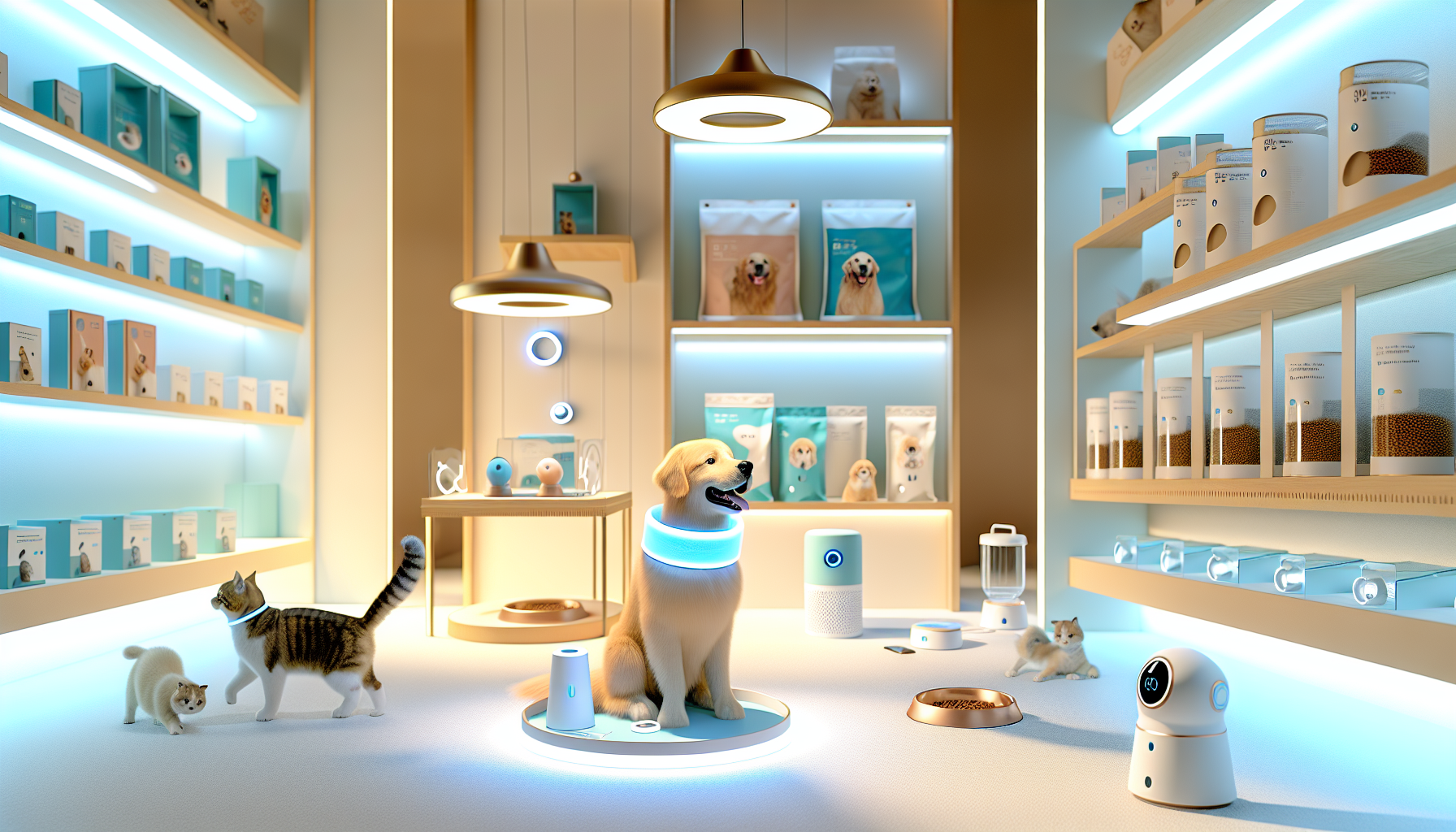
China’s booming pet economy is no longer defined merely by rising sales figures or the growing number of cats and dogs in urban households. Instead, it is increasingly shaped by emotional bonds, changing lifestyles and a new generation of consumers who see their pets not as property, but as family members.
That shift is forcing brands to rethink everything from product design and ingredients to marketing and technology. “If pet brands want to go mainstream today, they need three things: heart, looks and technology,” said Shang Yin, general manager of Taotian’s pet industry division, in a recent discussion during the 2025 T-EDGE Conference.
Shang was joined by Fang Yu, editor-in-chief of consumer content at TMTPost, to examine how emotional attachment, scientific awareness and smart living are reshaping China’s pet market — and what that means for brands hoping to compete in 2025 and beyond.
Pet ownership in China has expanded rapidly over the past decade, driven by urbanisation, delayed marriage, smaller households and rising disposable incomes. But the most significant change is psychological.
“People no longer see pets as animals they keep. They see them as companions, friends, even children,” Shang said. “We provide for their material needs, and they nourish us emotionally.”
That emotional connection is transforming consumption patterns. Products are no longer judged solely on price or basic function, but on whether they reflect care, responsibility and shared values.
Fang noted that this makes the pet industry unusually values-driven. “You can’t treat it as just another consumer goods category. If a brand doesn’t genuinely respect pets and their role in people’s lives, consumers will sense it immediately.”
One striking trend is the spread of “ingredient-consciousness” from the beauty and baby-care sectors into pet care. Owners now scrutinise the composition of pet food, treats and supplements with the same intensity they apply to human nutrition.
“Behind this is both scientific awareness and emotional projection,” Shang said. “People want what’s best for their pets, just as they would for a family member.”
Platforms like Tmall now require brands to clearly disclose ingredients, nutritional profiles, third-party test reports and traceability data. Brands are investing in veterinary nutrition research, clinical testing and customised formulas for different breeds, life stages and health conditions.
But the challenge does not stop with science. “You also have to translate complex research into language and formats people can understand — images, short videos, livestreams,” Shang said.
As pets become more “humanised,” consumption is shifting from basic care toward a full lifecycle experience that includes health, psychology, socialisation and aesthetics.
“It used to be about feeding them well,” Shang said. “Now it’s about total happiness.”
This has driven demand for products that blend function with emotion and design: calming music for pets, high-end grooming tools, festival costumes, birthday cakes and so-called “dopamine” fashion that creates visual joy and emotional satisfaction.
Some of these products are expensive and non-essential, yet they sell out quickly. That reflects how emotional value increasingly outweighs purely utilitarian considerations.
Another powerful driver is technology. As pets and owners share living spaces more closely, demand is growing for smart products that make cohabitation easier.
The market now offers AI-enabled pet cameras with motion tracking and voice interaction, GPS-enabled “pet phones” with health monitoring, fully automated litter boxes, smart feeders and temperature-controlled pet beds.
These products reduce daily labour for owners while also providing reassurance and emotional connection when they are away.
Interestingly, while people are spending more on pets overall, the share of spending devoted solely to food is declining. According to Tmall’s 2025 Double 11 Pet Consumption Report, the pet Engel coefficient — the proportion of spending on food — has fallen by nearly 3 percentage points over the past three years.
“This doesn’t mean people are spending less,” Shang explained. “It means spending is becoming healthier and more diversified.”
Owners are allocating more to healthcare, accessories, smart devices and experiential services, opening new opportunities for innovation and differentiation.
The attractiveness of the sector has drawn in companies from fashion, home appliances, automobiles and personal care. Taobao Tmall data shows that more than 70 brands from 11 industries have entered the pet market.
Some bring technological expertise, such as smart hardware firms developing aquariums or feeding systems. Others bring design and branding capabilities, appealing to young consumers who value aesthetics.
Cross-industry players are also extending pet ownership into new scenarios: pet-friendly hotels, travel, restaurants and cultural tourism. This requires brands to think beyond products and build ecosystems that integrate online and offline experiences.
Despite rising competition, Shang argued that opportunities remain for focused newcomers. Her formula: choose a niche, build content first, and earn emotional trust.
Niche positioning avoids head-on competition with dominant players. Content-led strategies — such as expert endorsements, educational storytelling and community engagement — can turn a product into a topic, and a topic into a brand.
Finally, platforms like Tmall should be treated not just as sales channels but as partners for trend insights, product incubation and scaling.
Pet owners combine rational decision-making with emotional motivation. They research products carefully but also respond strongly to storytelling, design and values. That makes competition intense and unforgiving.
Looking ahead to 2026, Shang predicts three major trends: stronger emphasis on aesthetic-driven design, deeper integration of AI and smart technology, and expansion into overseas markets.
“Pet business is a good business,” she said, “but not an easy one anymore. It has entered a stage that demands refined, long-term operations.”
Ultimately, Shang argued, success comes down to sincerity.
“Are you truly pet-friendly? Do you genuinely want to improve the lives of pets and their families?” she asked. “Only brands with heart, appealing design and real technology can earn lasting trust.”
In an economy increasingly driven by emotion, trust may be the most valuable currency of all.