

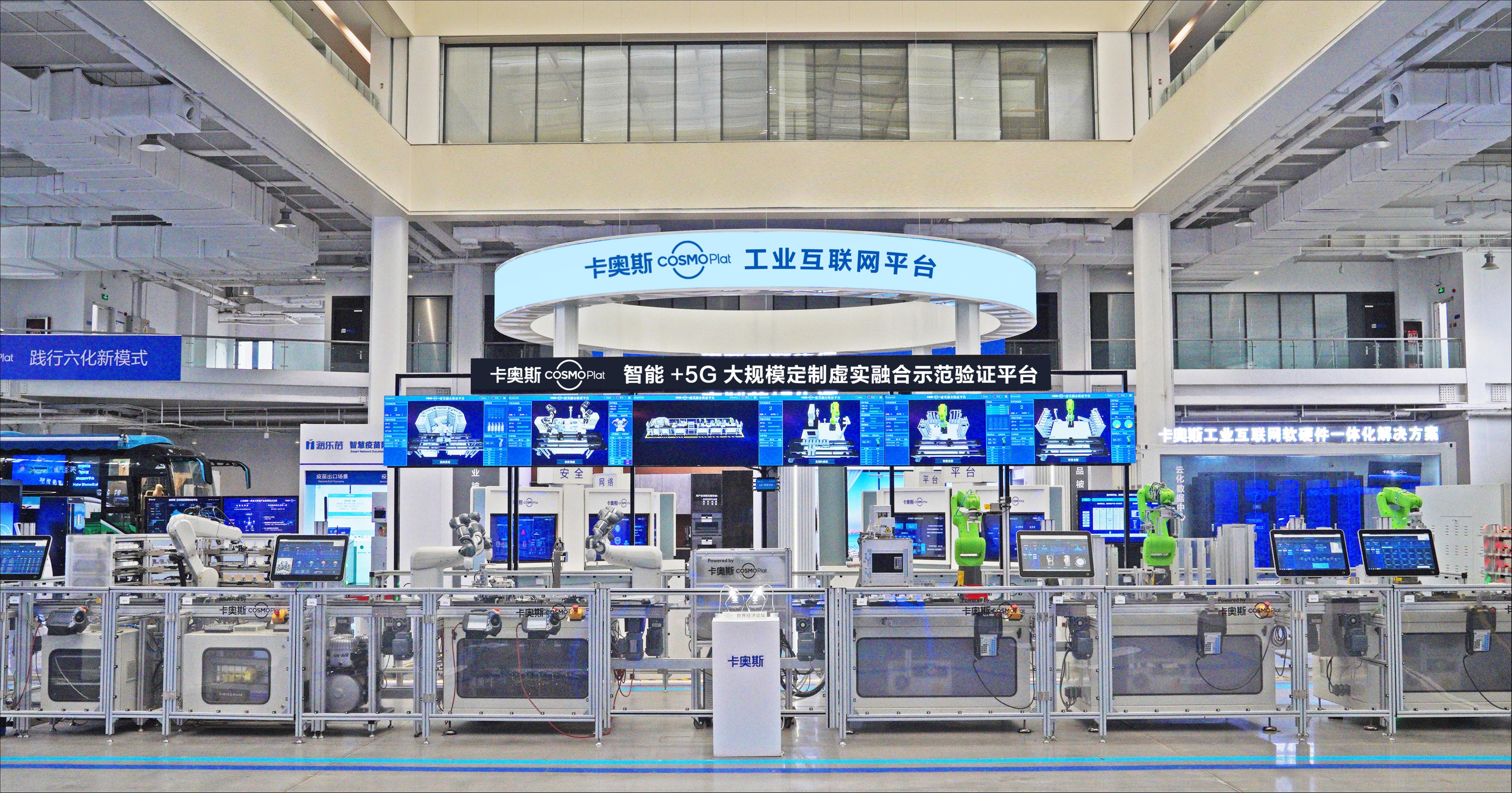
 Haier's subsidiary COSMOPlat has submitted its listing application to the Hong Kong Stock Exchange, kicking off its IPO process.
Public information shows that the COSMOPlat industrial internet platform was incubated and built by Haier, drawing on more than 40 years of manufacturing experience.
For Haier Group, COSMOPlat is the core vehicle for its shift from “making products” to “incubating platforms.” By distilling the proven experience and playbooks it validated in smart manufacturing and digital transformation into platform-based solutions that can be delivered externally, Haier Group successfully nurtured COSMOPlat into an industrial internet ecosystem brand.
For COSMOPlat, this Hong Kong IPO was a pivotal step in “stepping out from under Haier.”
With access to globally connected capital markets, COSMOPlat gained a more independent financing channel to fund R&D and market expansion. At the same time, once it becomes a public company, COSMOPlat’s brand credibility will rise sharply—inevitably attracting a broader range of third-party customers and partners.
Links to Haier
Admittedly, any platform incubated within a corporate giant will face similar doubts when it moves toward independence: without the parent company’s backing, how far can it really go?
COSMOPlat is a textbook case.
In its early development, COSMOPlat’s revenue mainly came from Haier Group. During this stage, with orders supplied from within the Haier system, COSMOPlat clarified the commercial model of an industrial internet platform and accumulated mature B2B experience; meanwhile, empowered by COSMOPlat’s digital capabilities, Haier itself completed its business transformation toward smart manufacturing.
For example, leveraging the COSMOPlat COSMOPlat platform, Haier successfully built a mass-customization model—allowing users to participate throughout the entire process, from product design and R&D to manufacturing, logistics and delivery, and iterative upgrades, so they can define for themselves the products they need.
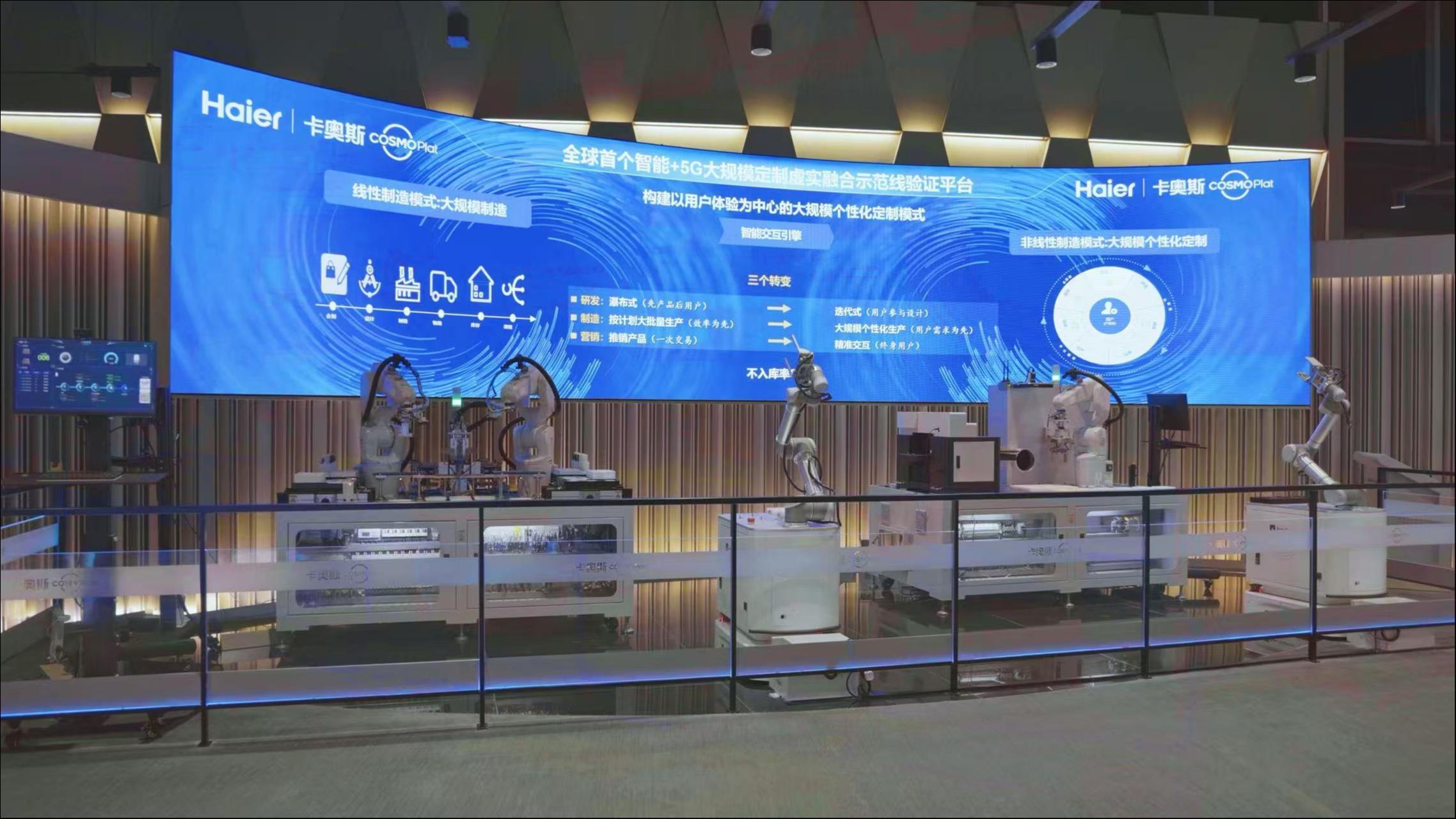
In addition, the Lighthouse Factories selected by the World Economic Forum are widely regarded as beacons guiding the Fourth Industrial Revolution. More than a thousand manufacturers applied, yet only nine made it into the first cohort. Haier, which leveraged COSMOPlat to achieve its intelligent manufacturing transformation and upgrade, was the only Chinese company selected.
And once the industrial internet platform capabilities had been fully honed within Haier’s own system, commercialization became the inevitable path for COSMOPlat to scale further.
In July 2020, Haier Smart Home transferred a 54.50% stake in COSMOPlat to an ecosystem investment company under the Haier Group. COSMOPlat subsequently completed multiple rounds of financing, bringing in “national team” capital such as the China State-owned Enterprise Structural Adjustment Fund and the CDB Manufacturing Transformation and Upgrade Fund, along with local state-owned capital. These investors not only provided funding, but also served as a form of credibility endorsement—significantly boosting COSMOPlat’s market trust.
After that, COSMOPlat’s share of external revenue began rising steadily.
According to figures in the prospectus, from 2023 through the first three quarters of 2025, the proportion of revenue from COSMOPlat’s independent third-party customers jumped sharply from 27.2% to 41.1%.
This means COSMOPlat has shifted from being “a solutions provider within Haier” to an open platform capable of empowering multiple industries. COSMOPlat’s solutions are gaining broad recognition outside the Haier ecosystem: it has successfully “productized” the manufacturing know-how accumulated while serving Haier and replicated it across different sectors.
9,500 paying customers
If the 41.1% share of external revenue is what supports COSMOPlat’s move “beyond Haier,” then its more than 9,500 paying customers are the strongest foundation for COSMOPlat’s push toward independence.
The prospectus shows that COSMOPlat has put into practice an ecosystem empowerment model of “co-building with large enterprises and sharing with small and medium-sized ones.” Built on the COSMOPlat industrial internet platform, it has developed a full-stack industrial digital-intelligence product portfolio of “platform + software + hardware,” providing customers with data intelligence solutions and IoT solutions.
Among them, the data-intelligence solutions include smart manufacturing solutions and green manufacturing solutions, with a focus on deepening capabilities in vertical industries such as home appliances, machinery and equipment, electronics, automotive, and energy and chemicals.
Globally, COSMOPlat has helped customers build 17 lighthouse factories, and has also successfully delivered China’s first WEF Sustainable Lighthouse Factory for a domestic enterprise as well as the first carbon-neutral lighthouse base.
The distinctive strengths of COSMOPlat’s IoT solutions lie in its integrated edge-to-cloud technical architecture, its proven ability to replicate across industries, and an open ecosystem built on co-creation and sharing. It does more than provide technical products: it packages Haier’s years of manufacturing experience into a transferrable transformation methodology. This is key to its continued ability to attract enterprises and ecosystem partners around the world.
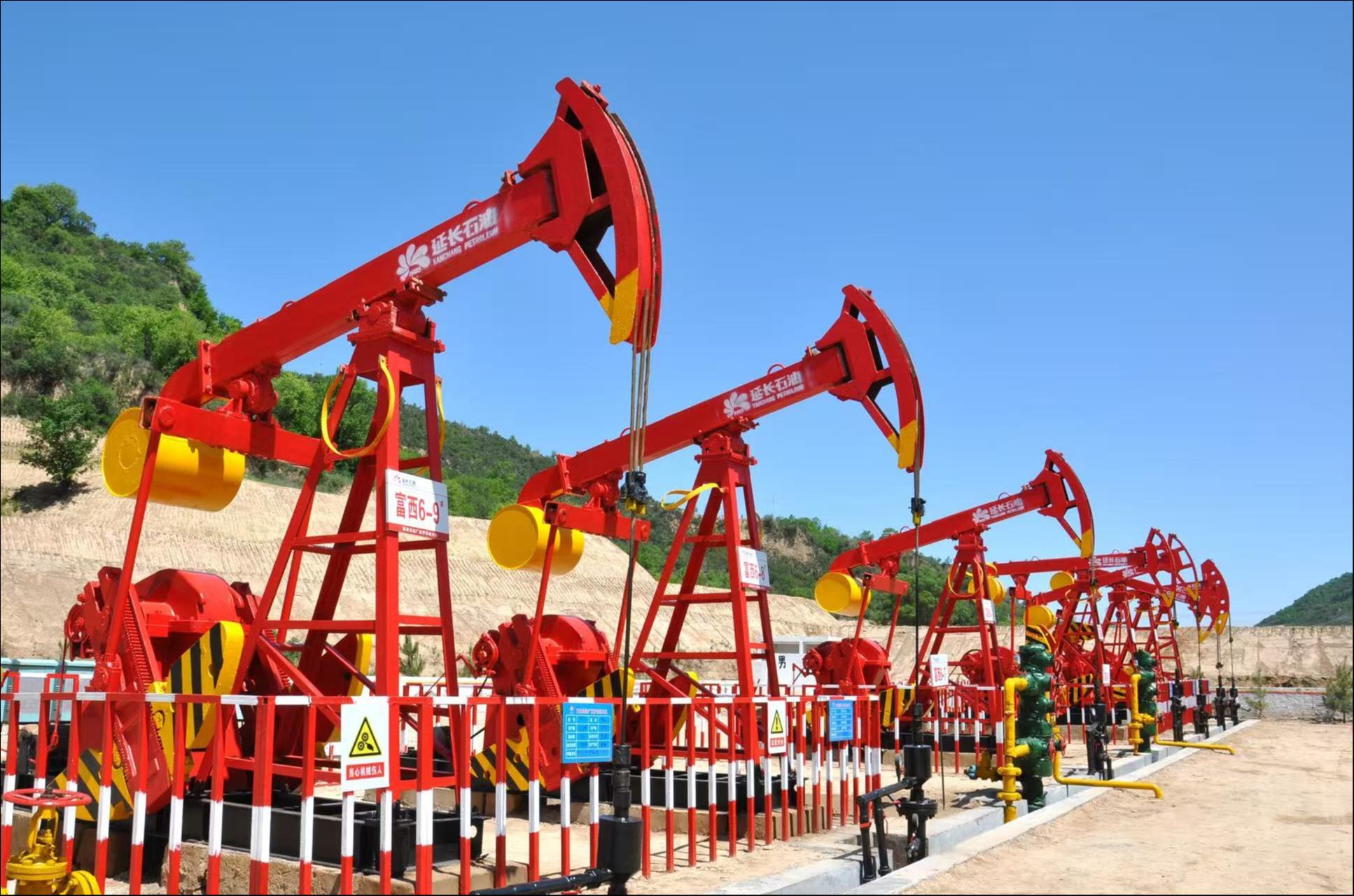
In the oil industry, COSMOPlat and Yanchang Petroleum jointly released the Tianzhi petrochemical large model, building 38 intelligent agents—such as a dynamometer-card intelligent assistant and an aldehyde separation tower process-optimization agent—and deploying them across scenarios including oilfield extraction, oil and gas refining, and production safety. By integrating cross-scenario knowledge systems with dynamic reasoning, it is helping the petrochemical sector upgrade from “efficiency gains in a single scenario” to “quality improvements across multiple scenarios.”
After the system began running stably, Yanchang Petroleum’s quality-control accuracy improved significantly compared with 2024, and its first-pass product conversion rate doubled.
In the steel industry, leveraging technologies such as smart IoT connectivity, intelligent control, and AI, COSMOPlat has helped Xinjin Group digitize its business processes, automate equipment operations, make operation and maintenance of plant facilities smarter, and enable AI-driven, energy-saving digitalization—so that energy management becomes “clearly visible, precisely controllable, and firmly manageable.”
In the first half of 2025, empowered by the industrial big-data computing and algorithm-training capabilities of the COSMOPlat BaaS engine, Xinjin Group successfully achieved end-to-end digital management of its compressed-air supply system, delivering energy savings and efficiency gains. Two Xinjin Group subsidiaries—Xinjin Steel and Xinjin Wanli—each cut carbon emissions by 5,115 tons per year at their compressed-air stations, with energy-saving rates exceeding 30%, annual electricity-cost savings of nearly RMB 7 million, and a 90% improvement in management efficiency.
To date, COSMOPlat has served more than 160,000 enterprises in total, with over 9,500 paying customers—underscoring the broad applicability of its solutions and strong market recognition. Its ecosystem-empowerment model—“co-building with large enterprises and sharing with small and medium-sized ones”—has enabled COSMOPlat to break quickly into different industries, accumulate industry know-how, and build hard-to-replicate ecosystem barriers.
IPO: making of a “new giant”
It can be said that, thanks to years of deep cultivation and its ability to uncover third-party customer use cases, COSMOPlat has already established a leading position in the industry.
According to Frost & Sullivan, measured by 2024 revenue, COSMOPlat ranked No. 1 in China’s platform-based industrial data intelligence solutions market. Its core platform, COSMOPlat, has topped the national cross-industry, cross-domain industrial internet platform rankings for seven consecutive years.
In addition, as its global expansion deepens, overseas revenue has been becoming an important second growth curve for COSMOPlat.
As of September 30, 2025, COSMOPlat’s solutions had been rolled out in more than 20 countries worldwide, serving over 50 overseas enterprises. Overseas revenue accounted for more than 12%, providing the world with a replicable new pathway to industrial digital and intelligent transformation.
This means that in the face of market doubts about whether it can operate independently apart from its parent company, COSMOPlat has charted a notably steady growth trajectory.
In fact, throughout the evolution of the business world, there have been many cases like COSMOPlat. Such companies typically inherit their parent groups’ deep industrial DNA, while also leveraging market-oriented operations to serve a broader range of industries.

Take Baosight Software as an example. It originated as the automation department of Shanghai Baosteel, responsible for the automation-driven transformation of Baosteel’s production processes. Around 2000, Baosteel Group consolidated its IT resources to establish Baosight Software Co., Ltd., which successfully went public in 2001.
This step was critical: it transformed Baosight Software from an “internal department” of the group into a public company that had to withstand market scrutiny and be responsible for its own profits and losses.
After going public, Baosight Software gradually established a clear development strategy. First, it continued to deepen its informatization and automation business in process manufacturing industries represented by steel; second, it leveraged Baosteel’s existing resources—such as plant buildings and energy—to expand into the IDC (Internet Data Center) business, forming a dual-engine growth model of “smart manufacturing + digital infrastructure.”
This new track has created enormous room for growth for Baosight Software without relying on its traditional core business. At present, the share of Baosight Software’s business coming from outside China Baowu Group has reached around 70%.
That’s why Baosight Software is an earlier example than COSMOPlat of a company that was “incubated inside a large enterprise and then developed independently.”
Going forward, as COSMOPlat successfully lists in Hong Kong and taps into global capital channels, it will gain more room for growth than Baosight Software and grow into a new giant in the industrial internet segment.