
When a mobile app bluntly named "Are You Dead?" quietly launched in China last year, few expected it to become a cultural talking point — let alone the country's most downloaded paid app.
Yet less than a year later, the minimalist check-in tool for people who live alone has gone viral, topped Apple's paid charts, sparked fierce online debate over its morbid name, and now prompted its creators to rebrand for a global audience and introduce a subscription fee.
The app — known in Chinese as Sileme, literally translating as "Are you dead?" — has now adopted the global brand name Demumu, its developers announced this week, as it prepares to roll out a new version aimed at users beyond China.
"After extensive consideration, the 'Sileme' app will officially adopt the global brand name 'Demumu' in its forthcoming new release," the company said in a statement on its verified Weibo account.
The concept behind the app is strikingly simple.
Users are asked to check in every two days by tapping a large green button on their phone to confirm that they are alive and well. If they fail to do so for several consecutive days, the app automatically notifies a designated emergency contact, warning that something may be wrong.
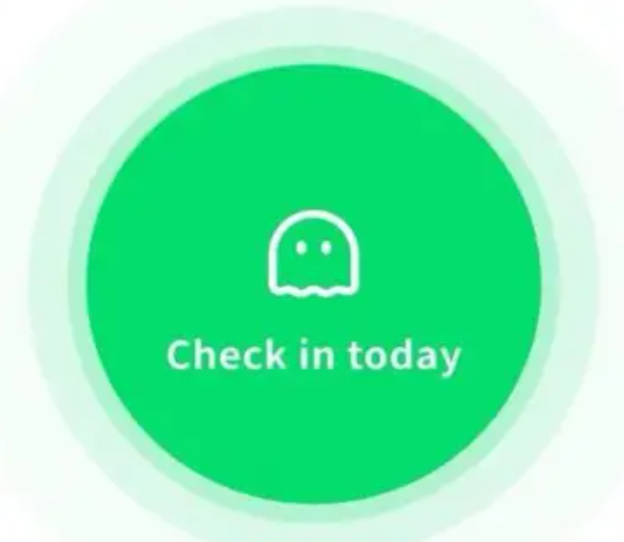
The app requires you to click a large button daily to confirm that you are alive
It is, according to its creators, "a lightweight safety tool" for "anyone choosing a solitary lifestyle" — whether a young professional living alone in a big city, a student far from home, or someone with limited social contact.
But it is also the starkness of its premise — and its unsettling name — that has captured the public imagination.
"There is a fear that people living alone might die unnoticed, with no one to call for help," one user wrote on Chinese social media. "I sometimes wonder, if I died alone, who would collect my body?"
The app's sudden popularity taps into a powerful social trend in China: the rapid rise of solo living.
China is expected to have around 200 million one-person households by 2030, according to estimates cited by state media, with more than 30% of urban residents already living alone. Delayed marriage, falling birth rates, labour migration and changing social norms are reshaping household structures across the country.
For many young Chinese, living alone is no longer a temporary phase but a long-term reality — and with it comes new anxieties about isolation, health, and safety.
"People who live alone at any stage of their life need something like this," another user wrote online. "So do introverts, people with depression, the unemployed and others in vulnerable situations."
One such user is Wilson Hou, a 38-year-old project manager working in Beijing, about 100km from his family.
"I worry that if something happened to me, I could die alone in the place I rent and no one would know," he said. "That's why I downloaded the app and set my mother as my emergency contact."
The app was first launched quietly in May last year by a small team of three founders born after 1995, operating out of Zhengzhou in Henan province. According to the developers, it cost just 1,000 yuan (about $140) to build.
But after weeks of viral attention, downloads surged — pushing the app to the top of China's paid App Store rankings.
With that popularity has come new costs. On Sunday, the company announced it would introduce an 8 yuan ($1.15) fee to support server and maintenance expenses. On Apple's App Store, the price is listed as 8 Hong Kong dollars (about $1.03) for overseas users.
The move triggered debate among users, with some saying the tool should remain free given its safety function, while others said the price was reasonable.
The app's name has proven just as controversial as its concept.
Some users have criticised it as unlucky or emotionally disturbing, arguing that repeatedly confronting the idea of death could worsen anxiety rather than relieve it. Others have called for a gentler alternative like "Are You Okay?" or "How Are You Today?"
Even the company admits the criticism has merit — and the decision to adopt "Demumu" as its global name is partly an attempt to soften its image.
Internationally, Demumu already ranks among the top paid utility apps in the United States, Singapore, Hong Kong, Australia and Spain — driven in part by Chinese users living overseas.
The original Chinese name itself was a wordplay on a popular food delivery app called "Are You Hungry?", giving it a darkly humorous edge that does not translate well across cultures.
The creators are now considering new directions, including products tailored specifically for the elderly — a significant demographic in a rapidly ageing China, where more than one-fifth of the population is already over 60.
In a recent post, the company wrote: "We call on more people to pay attention to elderly people living at home, to give them more care and understanding. They deserve to be seen, respected and protected."
One founder, known publicly only as Mr Guo, told Chinese media the team hopes to raise funding by selling 10% of the company for 1 million yuan — a striking jump from its humble origins.
Beyond its technical function, the app has become something of a social mirror, reflecting both the freedoms and the fragilities of modern urban life.
Its success suggests that as societies become more individualised, people are turning not only to communities and families for reassurance, but increasingly to technology — even for something as existential as proof of being alive.
As one user put it simply: "Maybe some conservative people can't accept it. But it makes those of us who live alone feel a little more at ease about living our lives."
In that sense, "Are You Dead?" may be less a morbid question — and more a quietly human one.