

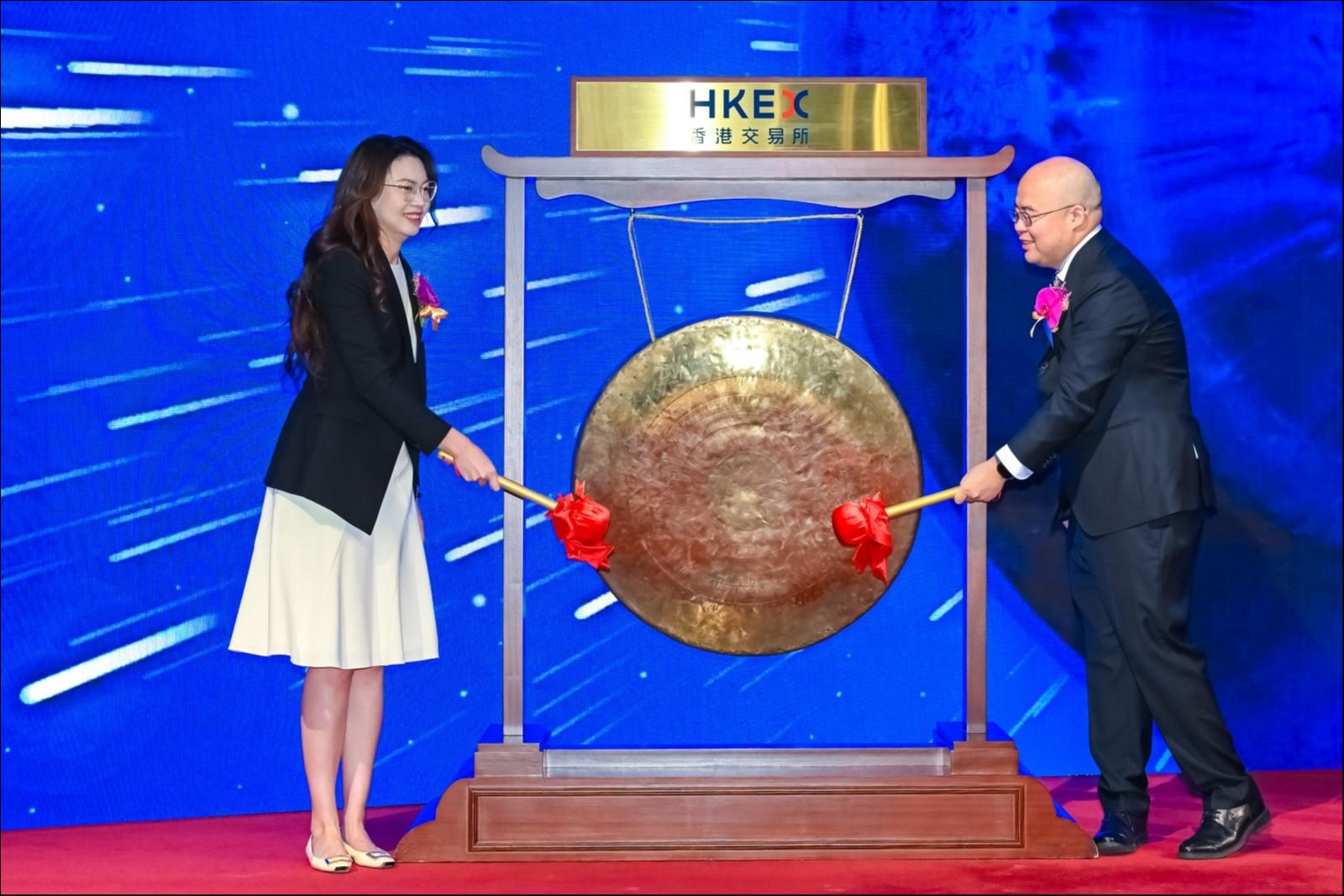
Shares of Chinese artificial intelligence company MiniMax surged on their trading debut in Hong Kong on Friday, underscoring strong investor appetite for AI-related listings and helping to lift sentiment across the city’s technology sector.
MiniMax, which develops large-scale multimodal AI models, rose more than 80% shortly after the opening bell before paring gains. The stock was last trading at HK$294, valuing the company at about HK$89.8 billion ($11.5 billion), according to LSEG data.
The company raised about HK$5.54 billion ($710 million) in its initial public offering, selling shares at the top of the indicated price range. Demand was heavy, with the retail tranche oversubscribed 1,837 times and the institutional tranche 37 times, according to the company’s listing documents.
The strong debut adds to a wave of renewed interest in Hong Kong’s IPO market, particularly for companies tied to artificial intelligence, after a prolonged slump driven by regulatory tightening, weak global capital flows and geopolitical uncertainty.
MiniMax, founded in early 2022 and headquartered in Shanghai, is one of a new generation of Chinese AI companies seeking global markets from inception, with most of its revenue coming from overseas, according to its prospectus.
Cornerstone investors in the offering included Aspex Management, Eastspring Investments, Mirae Asset, Alibaba Group and China’s E Fund, which together subscribed for about HK$2.7 billion worth of shares. Cornerstone participation is often seen as a signal of institutional confidence, as such investors typically agree to hold shares for a set period after listing.
At the listing ceremony, MiniMax founder and Chief Executive Yan Junjie said the company aimed to focus on advancing AI capabilities and expanding their real-world applications.
“The real value of an AI company lies in its ability to continuously deliver advanced intelligence for human use,” Yan said, according to a transcript of the event.
MiniMax operates in a fiercely competitive field dominated globally by companies such as OpenAI, Google and Anthropic, and domestically by Chinese rivals including Baidu, Alibaba and Tencent-backed startups.
Unlike many peers that began with a focus on text-based large language models, MiniMax has concentrated on so-called “full-modality” models that integrate text, speech, image and video generation.
In 2023, the company launched what it described as China’s first speech large model based on the Transformer architecture. It followed with an upgraded version in 2025, and says its speech models have been used to generate more than 220 million hours of audio.
MiniMax entered video generation in 2024 and upgraded its video model in 2025. It says its video tools have been used to generate hundreds of millions of clips, largely by overseas users.
In late 2025, the company released and open-sourced a new text model, MiniMax M2, which ranked among the top global open-source models on independent benchmarking platforms such as Artificial Analysis and OpenRouter, according to the company and third-party rankings.
The company said that as of September 2025 it had more than 212 million users across over 200 countries and regions, and that overseas markets accounted for more than 70% of its revenue in the first nine months of last year. Revenue grew more than 170% year-on-year over that period, it said, though it did not disclose profit figures.
Like many AI companies, MiniMax remains in an investment-heavy phase, spending heavily on computing infrastructure, talent and research. The company said it had spent about $500 million since its founding, a fraction of what major U.S. rivals have invested, but still a significant outlay relative to its size.
The company’s listing comes as global investors search for exposure to artificial intelligence beyond U.S. mega-cap stocks, amid growing expectations that AI adoption will drive productivity gains across industries ranging from software and media to manufacturing and healthcare.
Hong Kong has been trying to revive its IPO market after several weak years, and AI listings are increasingly seen as a way to attract international capital back to the exchange.
“AI remains one of the few sectors where investors are still willing to pay a premium for growth,” said one Hong Kong-based fund manager, who declined to be named because he was not authorised to speak publicly. “MiniMax fits that narrative as a relatively pure-play AI company with global reach.”
Still, analysts caution that valuations remain sensitive to changes in sentiment, regulation and technology cycles.
“AI companies are competing in an extremely fast-moving environment,” said another analyst. “Today’s leaders can quickly be overtaken, and monetisation remains a challenge for many.”
MiniMax said the proceeds from the IPO would be used mainly to further develop its large models, expand AI-native products and invest in infrastructure over the next five years.
For now, the company’s strong debut highlights how artificial intelligence remains one of the few areas in global equity markets capable of generating sustained investor excitement — even as broader economic uncertainty continues to weigh on technology stocks elsewhere.