

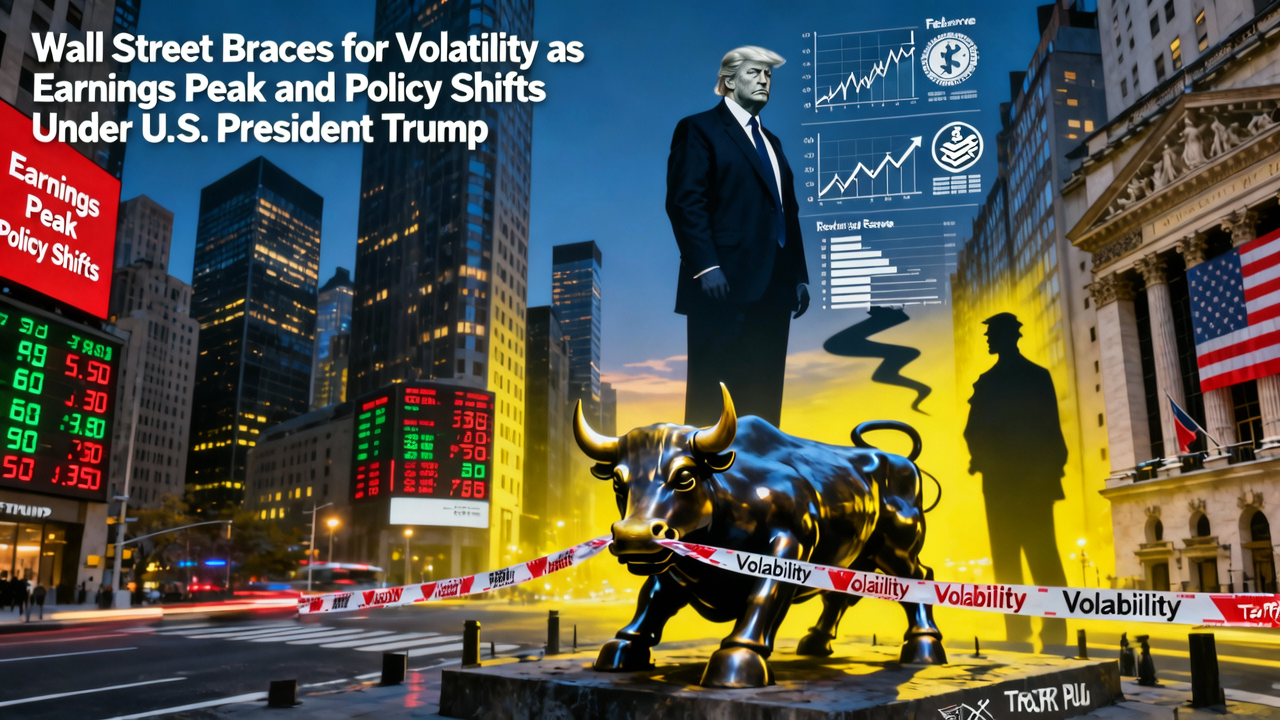
NextFin News - As the first week of February starts, the U.S. stock market is entering a high-stakes week where corporate fundamentals and geopolitical posturing are set to collide. On Sunday, February 1, 2026, institutional investors and retail traders alike are recalibrating their portfolios in anticipation of a flurry of quarterly reports from the world’s largest technology firms and a critical update on the national labor market.
The S&P 500, which has shown resilience following the January 20, 205 inauguration of U.S. President Trump, now faces a dual challenge: justifying record-high valuations amidst a cooling job market and navigating the early policy ripples of the new executive branch.
So the first week of February 2026 is not just another trading week; it is a high-stakes collision of four massive catalysts. After a shaky finish in January, Wall Street is looking for a direction. Will the "Trump Trade" find its second wind, or are we looking at a deeper correction?
1. The Fiscal Cliff: The Shutdown "Monday Pivot"
The government entering a partial shutdown over the weekend has created an immediate sentiment overhang. While these events are often "buy-the-rumor, sell-the-news" non-events, the current political friction adds a layer of unpredictability.
• 🟢 Bullish Signal: A Continuing Resolution (CR) passed by Monday night or Tuesday morning. This would trigger a relief rally in small-caps (Russell 2000) and defense contractors.
• Bearish Signal: A deadlock extending past Wednesday. This would lead to a spike in the VIX and a "flight to quality" in long-dated Treasuries.
2. The Warsh Effect: A New Era for the Fed
The nomination of Kevin Warsh to succeed Jerome Powell is a tectonic shift. Warsh is perceived as more market-aligned and potentially more "dovish" regarding deregulation, but his appointment has already pushed the Dollar to multi-month highs.
• Watch the Signal: The 10-Year Treasury Yield. If yields stabilize despite the nomination, it means the market trusts Warsh to manage inflation. If yields spike, it suggests the bond market fears a "politicized Fed," which would be toxic for growth stocks.
3. The AI "Midterm Exam": Mega-Cap Earnings
This is the week where AI hype must translate into hard GAAP earnings. We have the trio of Alphabet (GOOGL), AMD, and Palantir (PLTR) taking the stage.
NextFin Pro Tip: Watch Alphabet’s Cloud margins. If AI is truly being monetized, we should see margin expansion, not just revenue growth.
4. The Friday Anchor: January Non-Farm Payrolls (NFP)
The week concludes with the most important data point of the month. In the context of the Warsh nomination, the NFP will dictate how much "room" the Fed has to move in the coming months.
• The "Goldilocks" Range: 140k – 180k jobs. This suggests a resilient economy that isn't overheating.
• The Danger Zone: Anything below 100k (recession fears) or above 250k (inflation/rate-hike fears).
Executive Summary & Strategy
The market is currently testing support levels—specifically the 6,900 level on the S&P 500.
• Early Week: Expect volatility. The "Shutdown Noise" will dominate headlines but likely provide a "fake-out" move.
• Mid-Week: Tech earnings will provide the real alpha. If Google and AMD beat expectations, the Nasdaq could see a 2–3% bounce.
• Friday: The NFP will determine if we close the week in the green or if the January slide continues.
For the week ahead, the operational recommendation for investors is one of 'cautious cyclicality.' While the temptation to chase the momentum in AI and Big Tech remains strong, the shifting policy environment suggests a need for diversification into defensive sectors and domestic-focused small-caps that are less sensitive to international trade tensions.